 Pin it
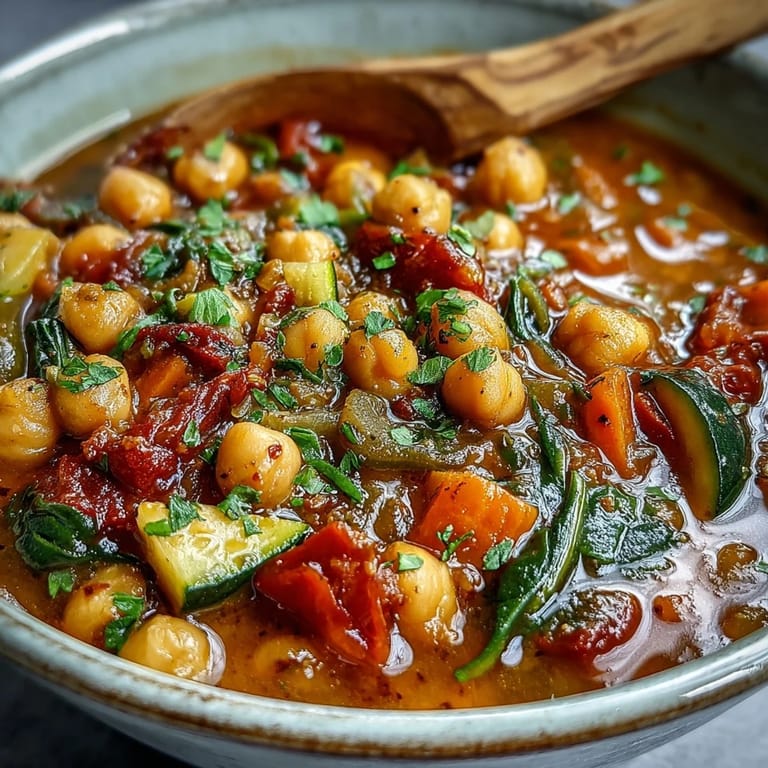
 There's something almost meditative about the moment when aromatics first hit hot oil—that split second before everything transforms. I discovered this chickpea stew on a gray Tuesday afternoon when my fridge was nearly empty and my energy was lower. What started as making do with pantry staples turned into something so nourishing and alive that I've been making it ever since, sometimes as a quiet lunch for one, sometimes when friends need feeding.
I made this for my sister when she was going through a rough patch, and she told me later that the smell alone made her feel cared for. We sat at my kitchen table with steaming bowls, and she asked for the recipe before she'd even finished eating. That's when I realized this stew does something beyond nutrition—it quietly communicates that someone took time to think about what would make you feel better.
Ingredients
- Cooked chickpeas: Whether from a can or the pot, these are your protein anchor—they stay tender without turning mushy if you don't oversimmer them.
- Onion: That translucent stage isn't just flavor; it's the foundation that lets everything else taste like itself.
- Garlic: Two cloves is the sweet spot where you taste it as a friend, not a force.
- Carrots and celery: These create the depth that makes people ask what you put in here, and you'll smile knowing it's just vegetables being honest.
- Red bell pepper: The brightness here cuts through the earthiness beautifully.
- Zucchini: Added late so it keeps its shape and doesn't disappear into the broth.
- Fresh spinach: It wilts in seconds—save it for the very end or it becomes invisible.
- Diced tomatoes: Canned is perfect here; they've already done the breaking-down work for you.
- Vegetable broth: Low-sodium means you taste the vegetables, not salt.
- Olive oil: It's not just cooking medium; it carries all those spice flavors forward.
- Cumin: Warm and slightly nutty; this is what makes it taste Mediterranean rather than generic.
- Smoked paprika: A whisper of smoke that makes everything more complex.
- Turmeric: Half a teaspoon is enough to add earthiness and those gut-supporting compounds everyone talks about.
- Coriander: Subtle and floral; it bridges the gap between all the other spices.
- Bay leaf: One leaf, removed at the end, teaches you about restraint in seasoning.
Tired of Takeout? 🥡
Get 10 meals you can make faster than delivery arrives. Seriously.
One email. No spam. Unsubscribe anytime.
Instructions
- Start with heat and patience:
- Warm your olive oil over medium heat until it shimmers slightly—not smoking, just ready. This is where the magic begins, because hot oil doesn't just cook; it wakes up whatever touches it next.
- Build your base:
- Dice your onion and add it to the hot oil, then step back and let it sit for a moment before stirring. You'll see the edges turn golden and translucent; that's when you know it's ready for the rest of the vegetables.
- Layer in the vegetables:
- Add your minced garlic, sliced carrots, celery, and red bell pepper all together, stirring occasionally. The whole pot starts to smell incredible within five minutes, like someone's kitchen is making something worth waiting for.
- Toast your spices:
- This is the crucial moment—add all your dry spices and that bay leaf, then stir constantly for about a minute. You'll notice the aroma becomes almost intoxicating; that's your signal that the spices are releasing their oils and flavors into the oil.
- Bring everything together:
- Add your chickpeas, diced tomatoes with their juice, and vegetable broth all at once. Give it a good stir, then let it come to a boil—you'll see it bubbling eagerly around the edges.
- Simmer and let it meld:
- Drop the heat to low and let everything sit uncovered for 20 minutes, stirring every few minutes. The longer it simmers, the more the flavors begin to know each other.
- Add the tender vegetables:
- Dice your zucchini and add it to the pot, letting it cook for about seven minutes until it's just tender but still holding its shape. This timing matters because overcooked zucchini disappears.
- Finish with freshness:
- Stir in your fresh spinach and watch it wilt down in about two minutes—it'll seem like you added so much, then suddenly it's incorporated and the stew turns a deeper green. Remove that bay leaf now.
- Taste and adjust:
- This is where you become the chef—add more salt, a squeeze of lemon, or heat if you want. Trust your palate here.
 Pin it
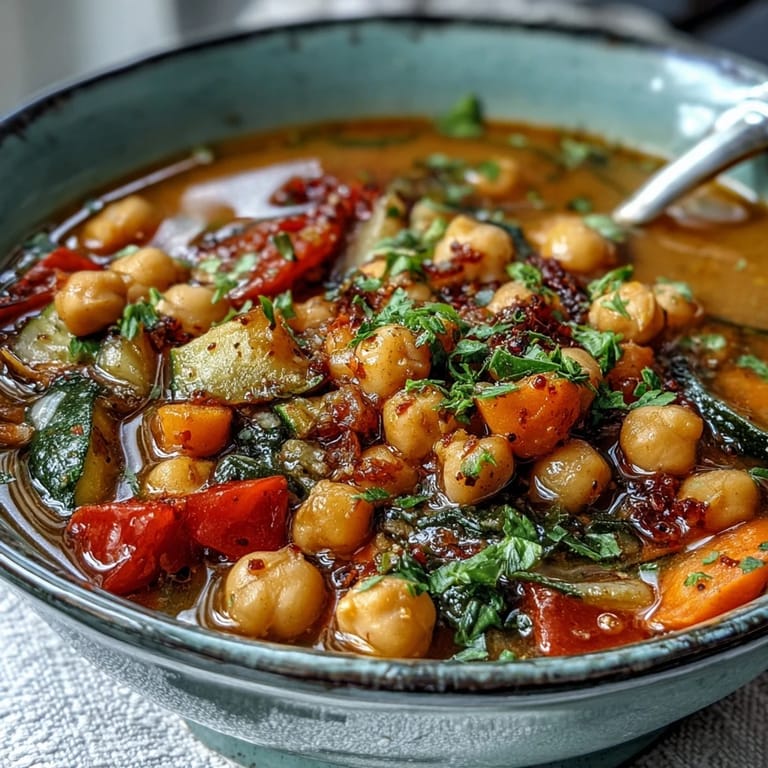
 There's a quiet power in feeding someone something made from earth and intention. This stew became my answer to both question and crisis—the thing I make when I want to say I see you, without having to say much at all.
The Spice Story
The first time I made this with all four spices instead of just cumin, I understood why Mediterranean cooking has survived centuries. Each spice does something specific—cumin warms, paprika adds depth, turmeric brings earthiness, and coriander ties them together with something almost floral. Together, they don't taste spiced; they taste like a place you've never been but somehow recognize.
Texture and Timing
One of my early batches, I added the zucchini too early and it turned into mush. Now I watch for that moment when everything else is nearly done, and only then does the zucchini get its turn. The best stews have a conversation happening inside them—soft chickpeas, tender carrots, crisp-tender zucchini, wilted spinach—and timing is how you keep all the voices distinct.
Serving and Variations
This stew is already complete, but it becomes different things depending on what happens around it. Sometimes I serve it with whole grain bread so thick and crusty that it stands up to the broth without falling apart. Other times I finish with fresh parsley and lemon that cuts through and makes everything brighter.
- A squeeze of fresh lemon at the end lifts all the flavors without making anything taste sour.
- Crumbled feta or a drizzle of tahini transforms it into something more, if you're not staying plant-based.
- Leftover stew actually tastes better the next day when all those flavors have had time to become friends.
 Pin it
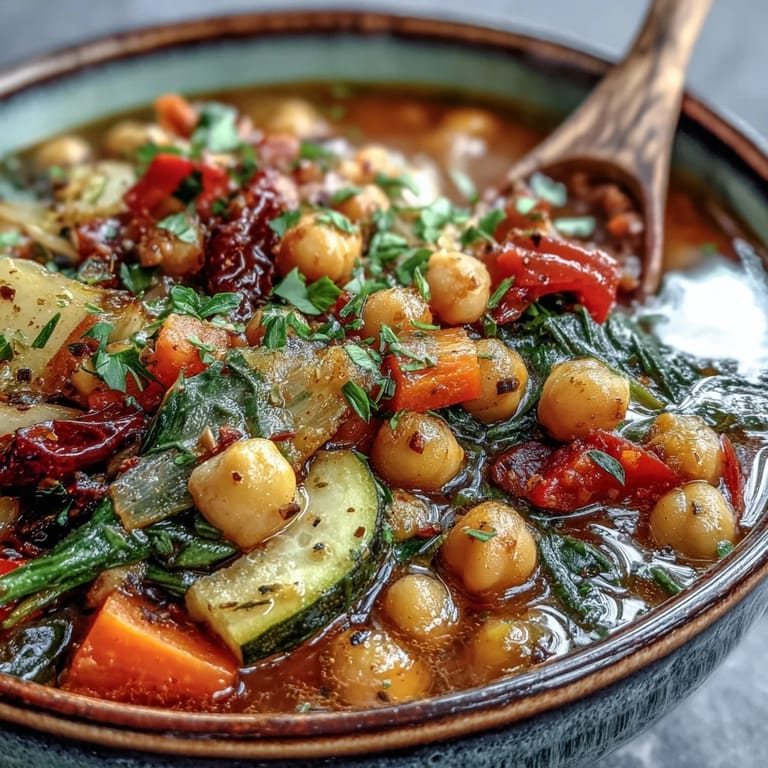
 Make this when you need to nourish something in yourself or someone else. The stew won't ask for gratitude; it'll just sit there, warm and patient, doing exactly what good food does best.
Common Questions
- → Can I use dried chickpeas instead of canned?
Yes, soak 1 cup dried chickpeas overnight, then cook until tender before using. This takes about 1-2 hours of additional cooking time but offers better texture and control over sodium levels.
- → How can I make this stew thicker?
Mash some of the chickpeas against the pot with a wooden spoon during the last few minutes of cooking, or let it simmer longer uncovered to reduce the liquid naturally.
- → What vegetables can I substitute?
Try kale or chard instead of spinach, sweet potatoes for carrots, or eggplant for zucchini. Any hearty vegetables that hold up well to simmering work beautifully in this stew.
- → How long does this stew keep?
Store in an airtight container in the refrigerator for up to 5 days. The flavors actually deepen over time, making it excellent for meal prep. It also freezes well for up to 3 months.
- → Can I add protein to make it heartier?
While chickpeas provide 11g of protein per serving, you can add white beans, lentils, or cubed tofu for extra substance. Adjust cooking time accordingly based on your additions.
- → What's the best way to serve this stew?
Serve hot with crusty whole grain bread for dipping, over brown rice or quinoa, or alongside a fresh green salad. A squeeze of lemon brightens all the flavors beautifully.