 Pin it
 There's something about the smell of cumin hitting hot oil that makes me pause whatever I'm doing. One October afternoon, I was in a rush, barely thinking about dinner, when I tossed together whatever vegetables were lingering in my crisper drawer with a handful of lentils and broth. What came out was this warm, deeply satisfying soup that somehow felt both simple and elegant. It became the recipe I return to when I need something honest and nourishing.
I made this for a friend who was going through a rough week, and I remember her sitting at my kitchen counter, steam rising from her bowl, finally looking like she could breathe again. She asked for the recipe that night, and I realized then that soup is one of those quiet gestures that says more than words sometimes. Now whenever she's struggling, she texts me a photo of her own version simmering on the stove.
Ingredients
- Brown or green lentils: Use whichever you have on hand—brown lentils hold their shape beautifully while green ones stay slightly firmer, and both bring a gentle earthiness that's the soul of this soup.
- Onion, carrots, and celery: This trio is often called a mirepoix, and for good reason—they build the foundation of flavor that everything else rests on.
- Garlic: Minced fresh garlic blooms when it hits the warm oil, filling your kitchen with an aroma that somehow makes cooking feel worthwhile.
- Zucchini: Added midway through cooking so it stays tender without dissolving into the broth.
- Tomatoes: Whether fresh or canned, they add a subtle brightness that prevents the soup from feeling heavy.
- Spinach or kale: Stir this in at the very end so it retains its color and stays vibrant rather than turning to mush.
- Vegetable broth: The liquid backbone—use a good quality one if you can, as it really does make a difference.
- Olive oil: A couple of tablespoons is enough to develop flavor without making the soup slick.
- Ground cumin: This spice brings warmth and depth without overpowering the vegetables.
- Smoked paprika: It adds color and a subtle smokiness that makes the soup taste like it's been simmering for hours.
- Dried thyme and bay leaf: A small but essential duo that ties everything together with an almost herbal note.
Tired of Takeout? 🥡
Get 10 meals you can make faster than delivery arrives. Seriously.
One email. No spam. Unsubscribe anytime.
Instructions
- Build your flavor base:
- Heat the olive oil in a large pot and add your diced onion, carrots, and celery. You'll know they're ready when the onion turns translucent and soft—this takes about five minutes, and you'll start smelling their sweetness release into the kitchen.
- Wake up the aromatics:
- Add the minced garlic and let it cook for just a minute, stirring so it doesn't catch and turn bitter. The aroma that blooms is your signal that everything's on track.
- Toast the spices:
- Sprinkle in the cumin, smoked paprika, and thyme, stirring constantly for about thirty seconds. This quick moment coaxes out the spices' essential oils and sets the mood for the entire pot.
- Bring everything together:
- Add your rinsed lentils, chopped tomatoes, vegetable broth, and bay leaf. Stir it all together and watch the colors meld into something warm and inviting.
- Let it simmer:
- Bring the mixture to a boil, then reduce the heat and cover. Let it bubble gently for twenty minutes—the lentils will soften and the broth will deepen in flavor.
- Add the delicate vegetables:
- Stir in your diced zucchini and simmer for another ten minutes until both the lentils and zucchini are tender but not falling apart.
- Finish with greens:
- Add the spinach or kale and cook for just two to three minutes until it wilts down and turns a vibrant shade of green. Don't skip this step—the color it brings is almost as important as the nutrition.
- Season and serve:
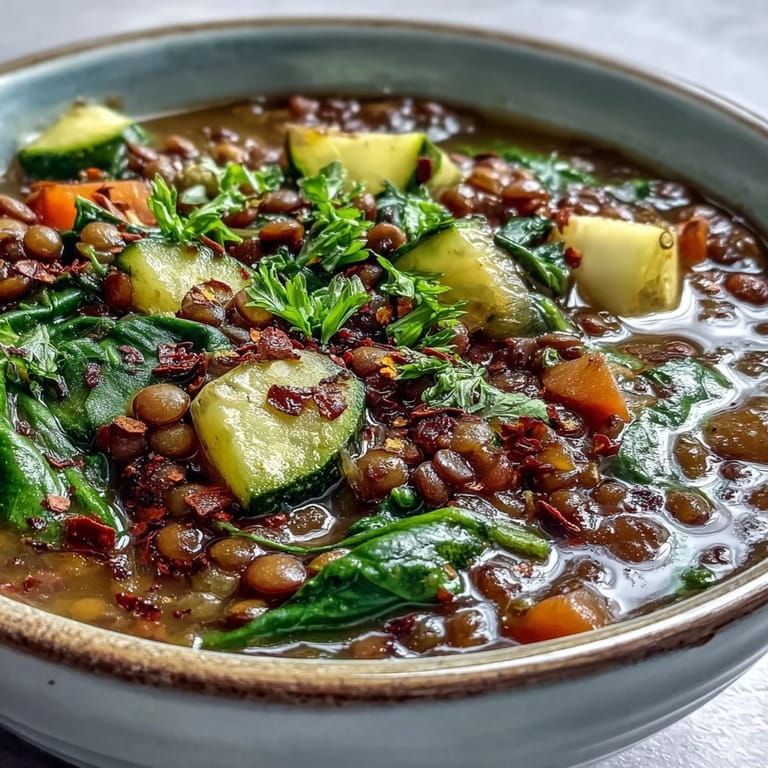
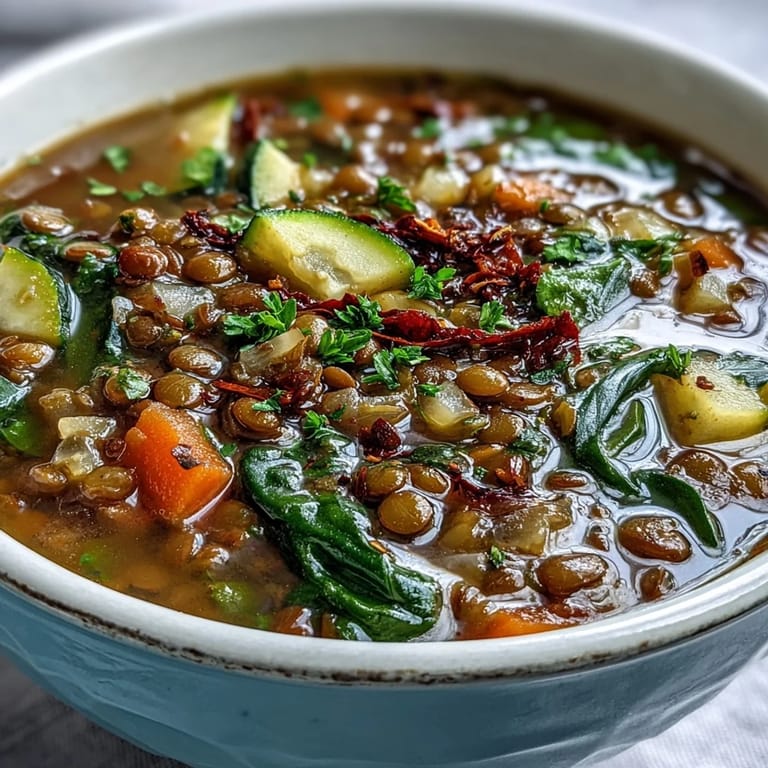
- Remove the bay leaf and taste carefully, adjusting the salt and pepper until it feels balanced. Ladle into bowls and finish with fresh parsley and a squeeze of lemon if you like.
 Pin it
 There was a morning last winter when I was teaching my nephew to cook, and he was worried he'd mess everything up. We made this soup together, and watching his face when he tasted it—that moment when he realized he'd created something delicious with his own hands—that's when food becomes more than sustenance. It becomes proof that you can do hard things, even small ones.
Variations and Seasonal Twists
This soup is beautifully adaptable to whatever the season brings. In fall, I swap the zucchini for diced sweet potato, which adds a gentle sweetness and creaminess that feels especially comforting as the weather turns cold. Spring versions might include fresh peas and lighter herbs like dill, while summer calls for bell peppers and maybe a touch more lemon. Even when I'm cooking without a plan, knowing the base recipe means I can improvise with confidence.
Texture and Consistency Tips
If you prefer a creamier soup, use an immersion blender to partially blend it before adding the greens—this breaks down some of the lentils and vegetables while keeping enough texture to remain interesting. I learned this trick by accident after over-blending a batch years ago, and now I'm much more intentional about it. The result is somewhere between chunky and smooth, which somehow feels more elegant than either extreme.
Serving and Pairing Suggestions
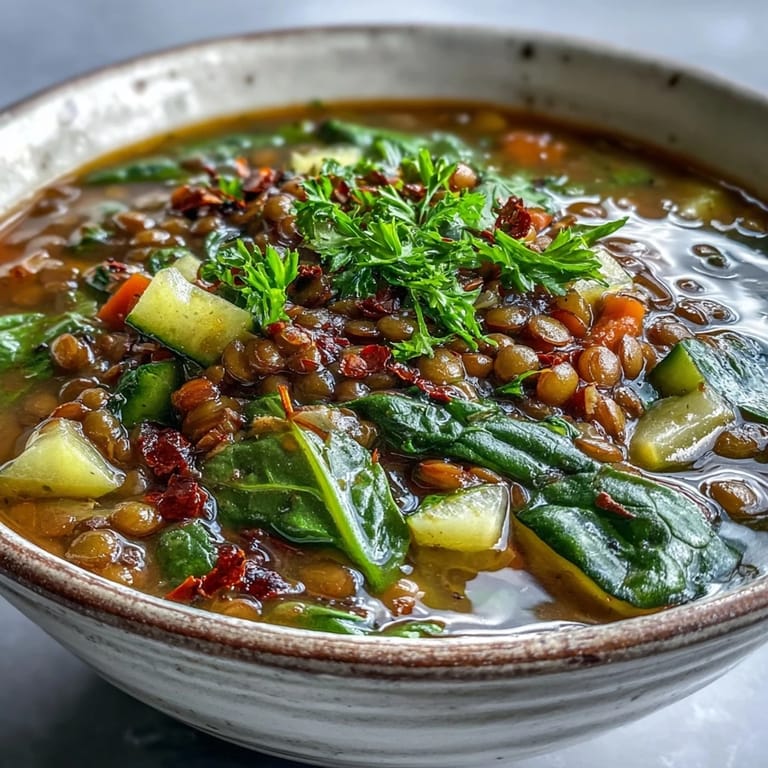
This soup shines when served hot in a deep bowl, and there's something about crusty bread alongside it that makes the meal feel complete. A squeeze of fresh lemon brightens all the spices without overwhelming them, and a scatter of parsley adds both visual appeal and a fresh note. If you're feeling generous with wine pairings, this works surprisingly well with a crisp Sauvignon Blanc or even a dry rosé.
- Serve with thick slices of sourdough or rye bread for scooping.
- A dollop of yogurt (dairy or plant-based) can add richness if you want to elevate it.
- Make a big pot on Sunday and enjoy it throughout the week—it actually tastes better as the flavors deepen.
 Pin it
 This soup has become the recipe I reach for when I want to feed people something that matters. It's humble enough to feel like home cooking, but thoughtful enough that it tastes like you actually cared.
Common Questions
- → Can I use red lentils instead of brown or green?
Red lentils cook much faster and break down into a creamier consistency. If using red lentils, reduce cooking time to 15-20 minutes total and expect a thicker, more pureed texture rather than distinct lentils in broth.
- → How do I store and reheat leftover lentil soup?
Store in an airtight container in the refrigerator for up to 5 days or freeze for up to 3 months. The soup will thicken when chilled, so add extra vegetable broth or water when reheating on the stovetop or in the microwave.
- → What vegetables work best as substitutions?
Sweet potatoes, bell peppers, parsnips, and butternut squash all work beautifully. Add firmer vegetables like sweet potatoes with the lentils, and softer ones like bell peppers toward the end of cooking to maintain texture.
- → Can I make this soup in a slow cooker?
Yes, sauté the aromatics first, then transfer everything except the greens to a slow cooker. Cook on low for 6-7 hours or high for 3-4 hours. Add spinach or kale during the last 15 minutes of cooking.
- → How can I add more protein to this soup?
While lentils provide 13g of protein per serving, you can boost this by adding chickpeas, white beans, or diced firm tofu. For non-vegan options, serve with a dollop of Greek yogurt or add cooked chicken.
- → Why is my soup too watery or too thick?
Lentils absorb liquid as they sit, so the consistency changes over time. For thinner soup, add more broth gradually. For thicker soup, simmer uncovered for 10-15 minutes or mash some lentils against the pot side to release starches.