 Pin it
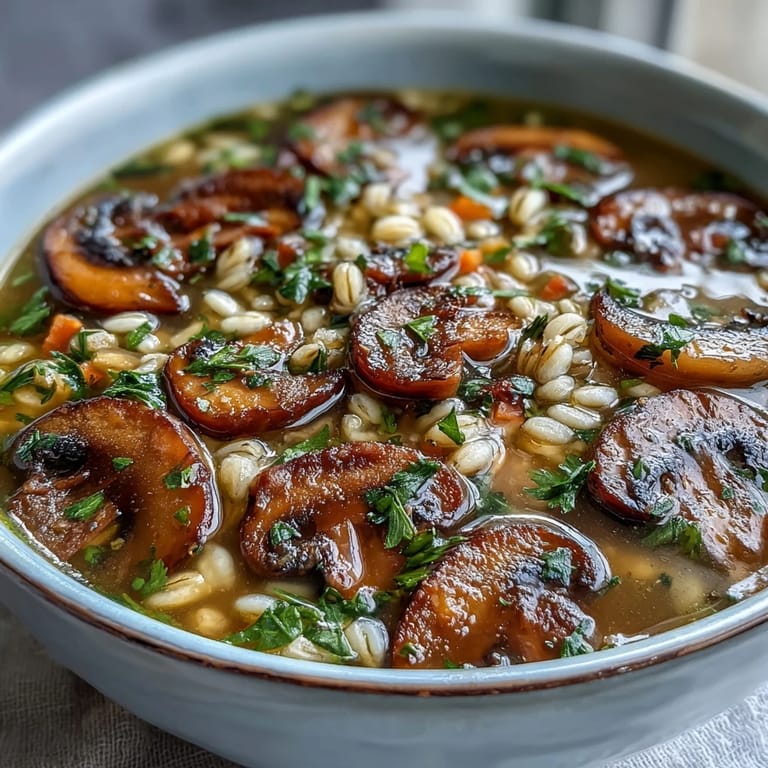
 There's something about the smell of mushrooms hitting hot oil that stops me mid-morning, no matter what I'm doing. One October afternoon, I was thumbing through an old cookbook when a friend called asking what I was making for dinner, and without thinking, I said mushroom and barley soup. She laughed because I'd never made it before, but by the time she arrived, the whole kitchen smelled like an autumn forest, and somehow it felt like the most natural thing I could have offered her.
My neighbor came by during the simmering phase and immediately opened the back door to crack a window, thinking something was burning, then stopped and smiled when she realized it was just the mushrooms caramelizing. She stayed for a bowl, and we sat at the kitchen table watching the barley soften in real time, talking about nothing important while the soup did all the work.
Ingredients
- Olive oil: Two tablespoons seems small until you watch the onions turn golden and realize the oil is doing something gentle and essential.
- Onion, garlic, carrots, and celery: This is the flavor foundation, and finely chopping the onion means it'll dissolve into the broth and disappear, but its sweetness stays.
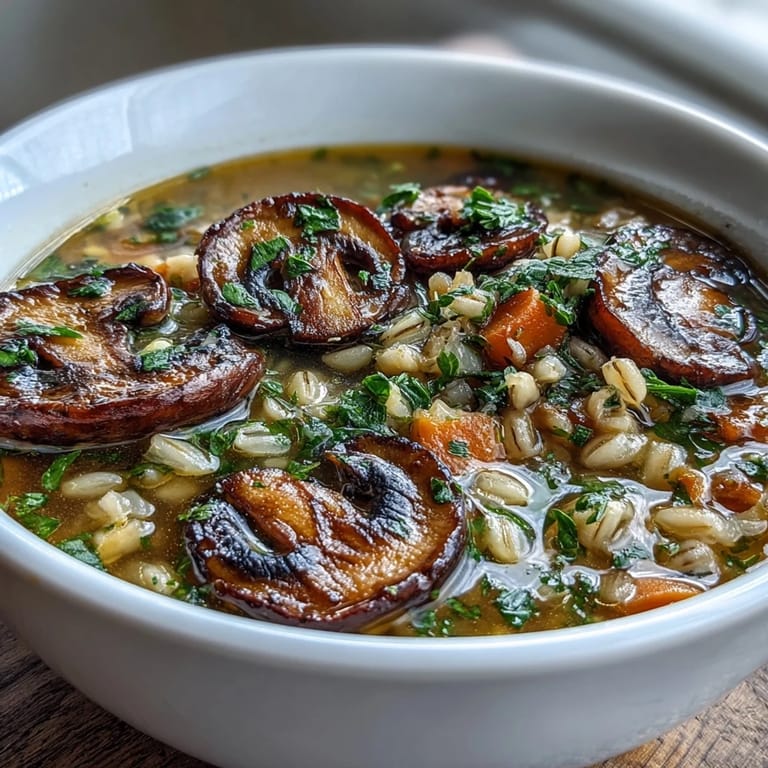
- Mushrooms: Four hundred grams sliced gives you enough surface area to brown and concentrate their earthy character, and cremini or button varieties won't overshadow the barley.
- Dried thyme and oregano: One teaspoon each; dried herbs are gentler in broth than fresh, and they'll soften and spread their flavor gradually.
- Pearl barley: Always rinse it first to remove the starchy coating, and this amount gives you chewy little kernels throughout without making the soup thick.
- Vegetable broth: One and a half liters is the right ratio to let the barley plump up while keeping the soup pourable and light.
- Bay leaf: One leaf adds depth without announcing itself, and you'll remove it before serving.
- Salt, pepper, and optional lemon juice: Taste as you finish; the lemon brightens everything and cuts through the earthiness if you need it to.
- Fresh parsley: Optional but worth the small effort, scattered on top just before eating.
Tired of Takeout? 🥡
Get 10 meals you can make faster than delivery arrives. Seriously.
One email. No spam. Unsubscribe anytime.
Instructions
- Warm the oil and soften the onion:
- Pour the olive oil into your pot and let it heat over medium until it shimmers slightly, then add the chopped onion and let it sit for a minute before stirring. After about three minutes, the edges will turn translucent and the pot will smell sweet and clean.
- Build the base vegetables:
- Stir in the garlic, carrots, and celery, and give everything a gentle stir every minute or so. You're aiming for a point where the carrots have lost their raw crunch but still hold their shape, around five minutes.
- Brown the mushrooms:
- Add all the sliced mushrooms at once and let them sit undisturbed for a moment before stirring; they'll release their moisture and then begin to brown at the edges. This takes six to eight minutes and is the step that builds the soup's deep, savory character.
- Add the herbs:
- Sprinkle in the thyme and oregano, give everything a quick stir to coat the vegetables, and breathe in. The pot will smell suddenly herbal and alive.
- Pour in the liquid and barley:
- Add the rinsed pearl barley, vegetable broth, and bay leaf, stirring until the barley is mostly submerged. Bring everything to a boil over medium-high heat, watching for the first big bubbles to break the surface.
- Simmer low and slow:
- Reduce the heat to low and leave the pot uncovered, letting it bubble very gently for thirty-five to forty minutes. The barley will slowly soften and swell, and the broth will thicken just slightly as the barley releases its starch.
- Season and serve:
- Fish out the bay leaf with a spoon, then taste the soup and add salt, pepper, and a squeeze of lemon juice if you want brightness. Ladle into bowls and top with fresh parsley if you have it.
 Pin it
 This soup became the thing I make when I want to feel like I'm taking care of people without making it obvious. There's something almost invisible about its kindness, the way it nourishes without demanding attention, the way it stays warm and available while you're doing other things.
How Barley Changes Everything
Pearl barley is not flashy, but it's quietly transformative in soup. Unlike pasta, which softens and then starts to fall apart, barley stays distinct; each grain becomes plump and tender with a soft core and a slight chew that reminds you there's something real in the bowl. It also absorbs and releases flavor in both directions, soaking up the mushroom and herb essence while adding a subtle nuttiness back to the broth. This is why the soup tastes better on the second day, after the barley has continued its quiet work of absorption.
Variations That Work
I've learned that this soup is forgiving without being boring. In late winter, I add diced potatoes in the last fifteen minutes so they stay firm and starchy, and in spring, I stir in chopped kale at the same point, letting it wilt into the warmth. For extra umami depth, one tablespoon of soy sauce poured in with the broth creates a subtle salty undertone that makes people ask what your secret ingredient is.
Storage and Reheating
This soup keeps in the refrigerator for up to four days and actually improves as it sits, the flavors knitting together overnight in a way that feels almost deliberate. Reheat it gently over medium heat, adding a splash of water or broth if it's thickened too much, and taste it again before serving because sometimes a squeeze of lemon juice is exactly what it needs on day two.
- Freeze leftover soup in containers for up to three months, and it thaws beautifully on the stovetop.
- Make sure your vegetable broth is gluten-free if that matters to you, since pearl barley contains gluten.
- Fresh parsley scattered on top just before eating adds a brightness that's worth the small effort.
 Pin it
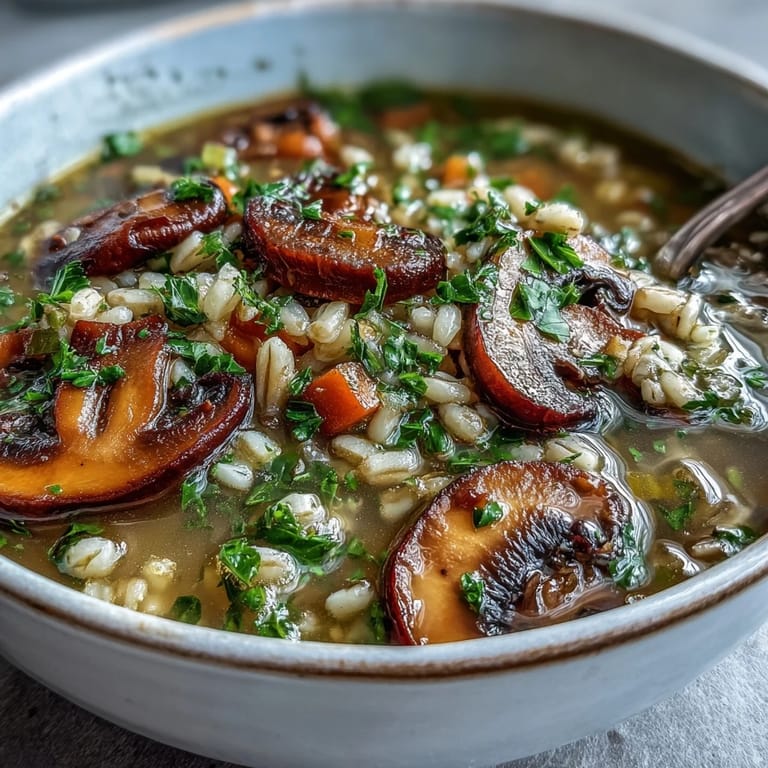
 This is the soup I return to when I want something that feels both simple and complete, like a meal that knows what it is and doesn't apologize for it. It's the kind of thing that feeds you quietly and stays with you.
Common Questions
- → Can I make this soup gluten-free?
Pearl barley contains gluten, but you can substitute it with quinoa, brown rice, or buckwheat for a gluten-free version. Just adjust cooking time accordingly as these grains may cook faster than barley.
- → How long does this soup keep in the refrigerator?
This soup stores beautifully for 4-5 days in an airtight container in the refrigerator. The barley will continue absorbing liquid, so you may need to add more broth when reheating. It actually tastes better the next day as flavors meld together.
- → Can I freeze this soup?
Yes, this soup freezes well for up to 3 months. Note that the barley may become slightly softer after freezing and thawing. Cool completely before transferring to freezer-safe containers, leaving some space for expansion.
- → What type of mushrooms work best?
Cremini or button mushrooms are recommended for their meaty texture and earthy flavor. You can also use shiitake for extra umami, or a mix of wild mushrooms for more complex flavor. Avoid very delicate mushrooms that might disintegrate during long simmering.
- → Can I add protein to make it more filling?
Absolutely. You can add white beans like cannellini or chickpeas during the last 15 minutes of cooking. For non-vegetarian versions, diced chicken or leftover turkey works wonderfully. Some also enjoy adding a poached egg directly into the hot soup before serving.
- → Why does the soup need to simmer uncovered?
Simmering uncovered allows some liquid to evaporate, which helps the soup naturally thicken and concentrate the flavors. The barley also releases starch as it cooks, contributing to the creamy consistency. Covering would prevent this reduction and result in a thinner broth.