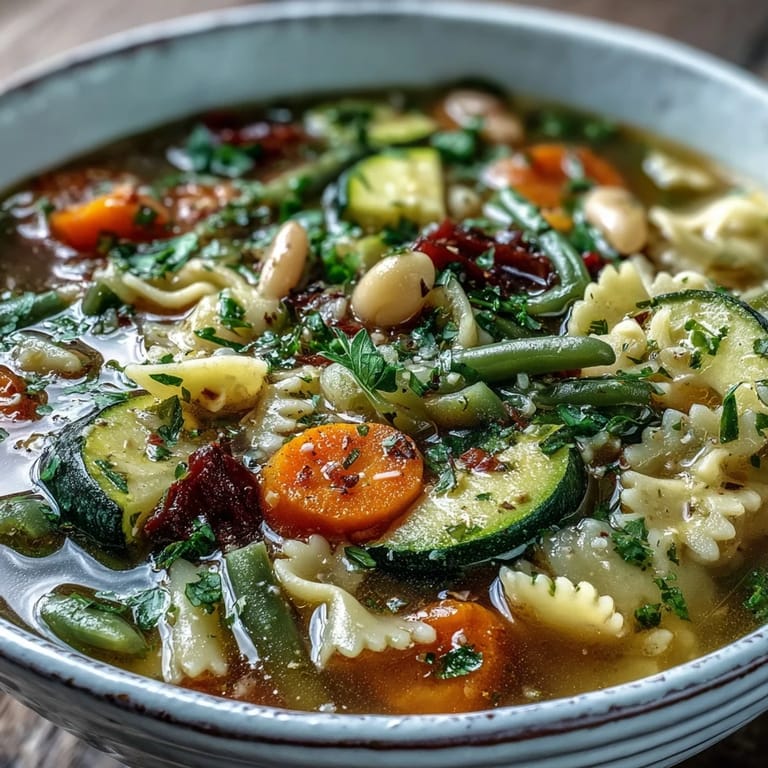
 Pin it
 My neighbor Maria taught me that minestrone isn't just soup—it's a conversation between seasons and what's in your pantry. One rainy afternoon, she stood at her stove with three different vegetables I'd never seen her use before, explaining how the beauty of this dish is that it bends to whatever you have. That lesson stuck with me, and now every time I make it, I feel like I'm having that same unhurried talk in her warm kitchen.
I made this the night my sister called to say she'd gotten the job she'd been hoping for—nothing fancy, just something warm to celebrate over the phone. She sat in her apartment three states away eating soup I'd made that morning, and we talked until it went cold. That's when I understood why people keep recipes like this close.
Ingredients
- Olive oil: Use a good quality one you actually enjoy—it's a foundation, not an afterthought, and it carries the flavor of everything that comes after it.
- Yellow onion, carrots, and celery: This holy trinity creates the flavor base that makes people ask what your secret is, even though it's just patience and the soffritto method.
- Garlic: Mince it small so it dissolves into the broth rather than sitting in chunks—it should be present but never aggressive.
- Zucchini and potato: The potato gives substance and a slight sweetness that balances the acidity of the tomatoes, while zucchini softens into something almost buttery.
- Green beans: They stay slightly firm even after simmering, giving you little moments of texture to look forward to.
- Diced tomatoes: Canned is perfect here—they're picked at their peak and already broken down, ready to do their job.
- Cannellini beans: Rinse them well so the broth stays clear and clean-tasting rather than starchy and dull.
- Small pasta: Ditalini or elbow macaroni works best because they're small enough to feel like a natural part of the soup, not something added on top of it.
- Vegetable broth: This is where your soup gets its voice—use broth you'd actually drink on its own, not the salty stuff you hide in the back of the cupboard.
- Dried Italian herbs: Buy them fresh-ish from the bulk section if you can, since dried herbs fade over time and you want them to sing.
- Bay leaf: It quietly improves everything without announcing itself—remove it before serving so no one bites into it by accident.
- Spinach or kale: Added at the very end so it stays bright green and doesn't turn gray and bitter from overcooking.
- Fresh parsley: Chop it just before serving—its brightness makes the whole bowl feel fresher and more alive.
- Parmesan cheese: Optional, but if you use it, grate it fresh and let it melt slightly into the hot soup where it belongs.
Tired of Takeout? 🥡
Get 10 meals you can make faster than delivery arrives. Seriously.
One email. No spam. Unsubscribe anytime.
Instructions
- Start your flavor foundation:
- Heat olive oil in a large pot over medium heat, then add diced onion, carrots, and celery. Let them soften and release their sweetness for about 5 minutes, stirring occasionally so nothing catches on the bottom. You'll know you're ready to move forward when the kitchen smells like comfort and the vegetables have turned golden at the edges.
- Build the layers:
- Stir in minced garlic, then add zucchini, potato, and green beans, cooking for 3 more minutes so everything gets to know each other. The garlic should become fragrant but not brown—if it turns dark, you've gone too far and need to start over.
- Bring in the body:
- Pour in diced tomatoes, cannellini beans, vegetable broth, dried herbs, and bay leaf all at once. Stir to combine, then let it come to a boil—you'll see the surface start to move and bubble more urgently.
- Let it simmer and meld:
- Reduce heat to medium-low, cover the pot, and let it bubble gently for 20 minutes so all the vegetables can become tender and the flavors can find each other. This is the moment to step away and do something else—the soup doesn't need you hovering.
- Bring in the pasta:
- Stir in your small pasta and simmer uncovered for 8 to 10 minutes, stirring occasionally so the pasta doesn't clump or stick to the bottom. Watch it carefully—pasta keeps cooking even after you turn off the heat, so err on the side of slightly al dente.
- Add the greens:
- Fish out and discard the bay leaf, then add spinach or kale and let it cook for just 2 minutes until it wilts into the broth. The color shift from bright to muted green happens quickly, so don't walk away.
- Season and taste:
- Add salt and freshly ground black pepper, tasting as you go—you're looking for the moment when everything clicks into place and tastes like itself, only better. Remember that saltiness is the last thing to fade, so be conservative at first.
- Serve with intention:
- Ladle the soup into bowls, scatter fresh parsley over the top, and offer grated Parmesan at the table so people can add as much or as little as they want. A crusty piece of bread and maybe a glass of wine turns this into something people will remember.
 Pin it
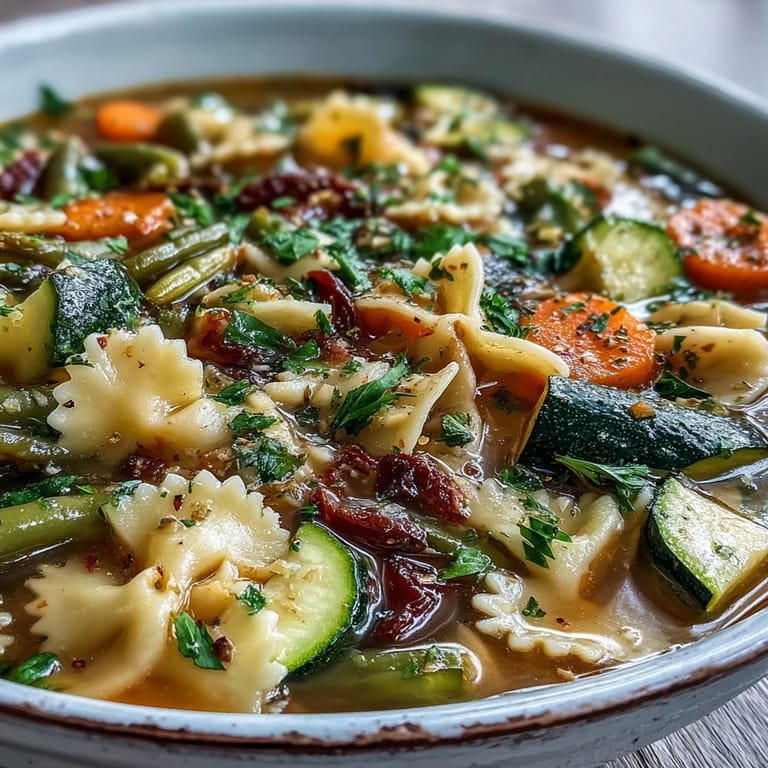
 There's a moment in every pot of minestrone when it stops being ingredients and becomes something with a personality, something that makes you want to feed people with it. That's the soup worth making, not because the recipe demands it, but because you'll recognize it when it happens.
Adapting With the Seasons
Summer calls for lighter vegetables—add diced bell peppers, fresh corn, or tender snap peas in the last 10 minutes so they don't lose their crunch. Fall is your chance to throw in diced butternut squash or cabbage, which breaks down into something sweet and silky. Winter doesn't ask for permission—add whatever root vegetables are sitting in your pantry, they'll only make it deeper and warmer. Spring feels right with fresh peas and young spinach added at the very end, keeping everything bright.
Making It Your Own
Once you've made this a few times, you'll start hearing what it wants from your kitchen. Some people swear by adding a whole Parmesan rind during the simmer and fishing it out before serving—the umami it releases is subtle but unmissable. Others stir in a tablespoon of pesto at the table, letting people customize their bowls to their mood.
Storage and Serving Wisdom
This soup gets better over a day or two, the flavors settling into each other like old friends in a quiet room. Store it in the refrigerator for up to four days, or freeze it in portions for those moments when you need comfort but don't have energy to cook.
- Reheat gently on the stovetop rather than the microwave—it honors the soup and keeps everything from turning mushy and sad.
- If it's thickened too much from the pasta absorbing broth, just add more vegetable broth or water until it reaches the consistency you want.
- Fresh parsley and good Parmesan should always be added right before eating, not stirred in to sit—they deserve their moment.
 Pin it
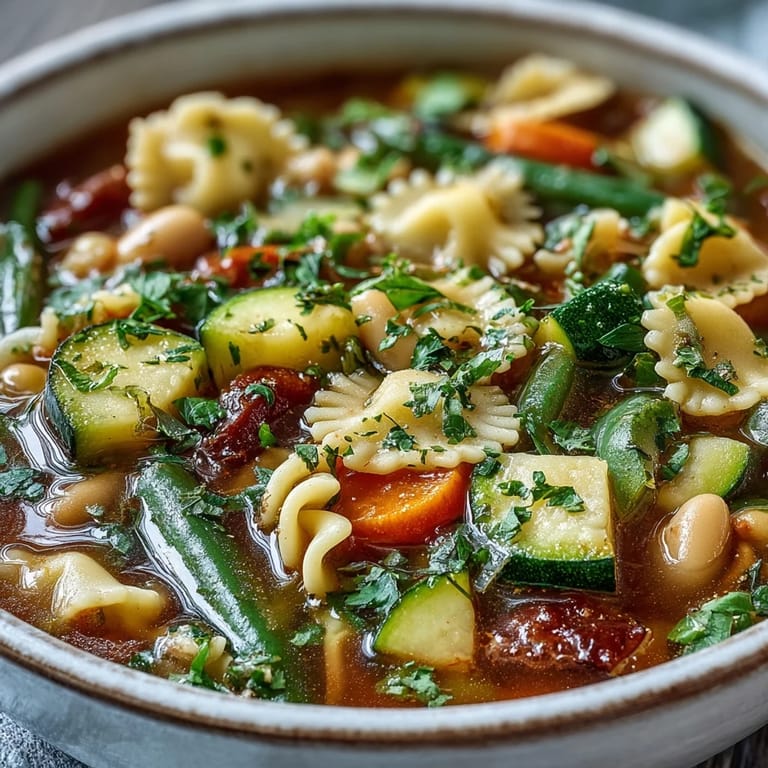
 Minestrone is the kind of soup that teaches you something about cooking if you let it. It's about knowing when to step in and when to let things happen on their own.
Common Questions
- → Can I make this minestrone soup ahead of time?
Yes, minestrone actually tastes better the next day as flavors develop. Store in an airtight container in the refrigerator for up to 4 days. The pasta may absorb liquid, so add extra broth when reheating.
- → What vegetables can I substitute in minestrone?
Minestrone is very versatile. Try adding cabbage, peas, bell peppers, or Swiss chard. Use whatever seasonal vegetables you have on hand while maintaining the classic Italian flavor profile with tomatoes and beans.
- → How do I prevent the pasta from getting mushy?
Cook the pasta directly in the soup but slightly undercook it by 1-2 minutes. If making ahead, cook pasta separately and add it to individual bowls when serving to maintain the best texture.
- → Can I freeze minestrone soup?
Yes, but it's best to freeze it without the pasta. Freeze the soup base for up to 3 months, then cook fresh pasta when reheating. This prevents the pasta from becoming overly soft and mushy.
- → What makes minestrone authentically Italian?
Authentic minestrone features a soffritto base of onions, carrots, and celery, uses quality olive oil, includes cannellini beans, and is finished with fresh herbs. Regional variations exist throughout Italy, making it a flexible comfort dish.
- → How can I make this soup more filling?
Add more pasta or beans, include diced pancetta or Italian sausage for non-vegetarian versions, or serve with thick slices of toasted Italian bread. A Parmesan rind simmered in the broth also adds richness.