 Pin it
 There's something about celery root that catches you off guard—earthy and refined at once, almost like discovering a secret ingredient that's been hiding in plain sight. I stumbled onto this bisque during a particularly gray November afternoon when I needed to turn a humble root vegetable into something that felt celebratory. The way it transforms into silk under the blender's whir, deepening from pale beige to luxurious cream, reminded me why I fell in love with French cooking in the first place.
I made this for my sister's dinner party last spring, and watching her face light up when she tasted it—that moment when she set down her spoon and said nothing, just smiled—that's when I knew this recipe deserved a permanent spot in my rotation. She'd brought a Sauvignon Blanc that paired so beautifully with the nutmeg notes that we ended up opening a second bottle.
Ingredients
- Celery root: The star of the show—peel it generously to remove the fibrous outer layer, and don't worry if it discolors slightly once cut; it disappears completely once blended.
- Leek: Use only the white and light green parts, sliced lengthwise and rinsed between layers to catch any hidden soil.
- Yukon Gold potato: Its natural creaminess helps build body without needing flour or cornstarch.
- Vegetable stock: A good quality one makes all the difference; avoid anything aggressively seasoned that might overpower the delicate celery root.
- Heavy cream: Added after blending to avoid breaking the emulsion—this is the final luxury.
- Butter and olive oil: The combination gives you better flavor depth than either fat alone.
- Nutmeg: Freshly grated, never ground from a tin—it's the whisper that elevates the whole dish.
Tired of Takeout? 🥡
Get 10 meals you can make faster than delivery arrives. Seriously.
One email. No spam. Unsubscribe anytime.
Instructions
- Build your aromatic base:
- Heat the butter and olive oil together in a large pot over medium heat, watching until the butter foams and smells nutty. Add the sliced leek, chopped onion, and minced garlic, stirring occasionally for 3 to 4 minutes until they're softened and fragrant but haven't taken on any color.
- Introduce the root vegetables:
- Add your diced celery root and potato to the pot, stirring gently to coat everything in that glossy fat. Let them cook for another 3 to 4 minutes, which helps them release their flavors into the aromatics.
- Simmer into tenderness:
- Pour in your vegetable stock, nestle in the bay leaf, and bring everything to a simmer. Cover the pot and let it bubble gently for 25 to 30 minutes—the vegetables should be falling-apart tender when a knife slides through with no resistance.
- Prepare for blending:
- Remove the bay leaf and pour in the milk along with the freshly grated nutmeg, stirring to combine. Let it warm through for a minute or two.
- Achieve silkiness:
- Using an immersion blender, pulse the soup gently at first, then blend continuously until completely smooth—no grainy texture, no tiny fibers. If you're using a countertop blender, work in careful batches, filling it only halfway to avoid hot liquid escaping.
- Final luxurious touch:
- Stir in the heavy cream and gently reheat over low heat, stirring occasionally—never let it boil or it may break. Taste as you go, seasoning with salt and white pepper (white pepper keeps the soup visually pristine) until it tastes like you.
- Serve with intention:
- Ladle into warmed bowls and finish with a scatter of chives, microgreens, or that optional drizzle of extra cream or truffle oil if you're feeling luxurious.
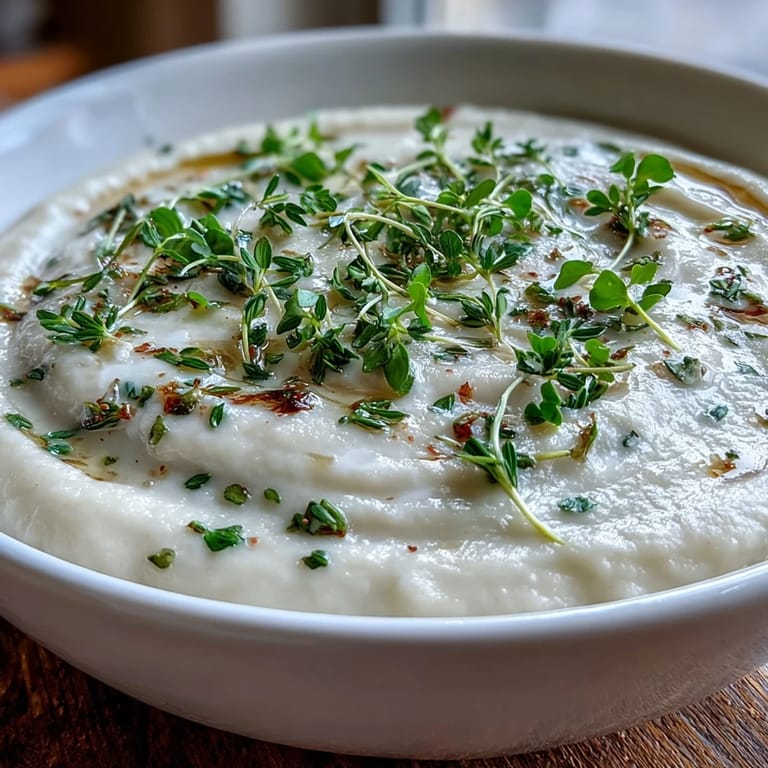 Pin it
 There's a quiet magic in serving something this refined at home, in your own kitchen with people you care about. It turns an ordinary dinner into something that feels a little ceremonial, like you've given your guests something precious.
The Art of the Perfect Blend
The difference between a good bisque and a transcendent one lies entirely in how smooth you get it. I learned this the hard way after my first batch, which had those tiny celery root particles that caught between your teeth—not ruined, exactly, but unmemorable. Now I blend longer than feels necessary, letting the immersion blender do slow, patient work rather than aggressive speed. Temperature matters too; cold soup won't blend as smoothly, so let it cool just slightly before blending if it's steaming hot.
Timing and Temperature Control
This soup rewards gentle heat throughout. I used to turn up the burner to speed things along, only to find the vegetables weren't cooking evenly and the cream was starting to separate. Medium heat feels slow while you're standing there, but it gives the vegetables time to actually become tender all the way through, and it means your cream stays silky when you add it at the end. A watched pot does boil, but an unwatched bisque develops that luxurious texture every single time.
Variations and Personal Touches
Once you understand how this soup works, it becomes a template for your own creativity. I've swapped in parsnip when celery root wasn't available, added a pinch of white miso for depth, even finished a batch with crispy sage leaves when I wanted something slightly different. The foundation is solid enough to support your experiments without falling apart. Think of this as the classic version—the baseline from which all your wonderful variations can begin.
- For a vegan version, replace the cream and milk entirely with full-fat coconut milk or a silky cashew cream made by blending soaked raw cashews with water.
- Serve alongside crusty bread for dipping or top with herbed croutons for a textural contrast.
- A crisp white wine like Sauvignon Blanc or Chardonnay will make your dinner feel like it belongs in a French bistro.
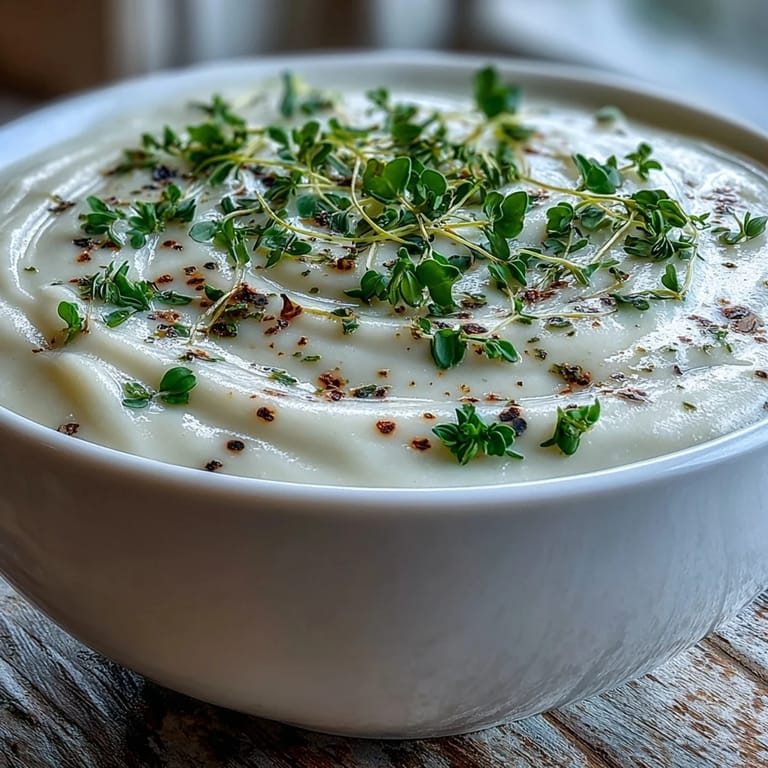 Pin it
 This bisque is proof that simplicity and elegance aren't opposites—they're dance partners. Make it for someone you want to impress, or make it for yourself on a Tuesday when you need to remember why you love to cook.
Common Questions
- → What does celery root taste like?
Celery root has a mild, delicate flavor that combines the subtle sweetness of celery with earthy, nutty undertones. When cooked, it becomes wonderfully creamy and develops a refined taste that's perfect for elegant soups.
- → Can I make this bisque ahead of time?
Absolutely. This bisque actually develops deeper flavors when made a day ahead. Prepare fully, then refrigerate. Reheat gently over low heat, stirring occasionally. Add a splash more liquid when reheating if needed.
- → Why add potato to the soup?
The Yukon Gold potato serves as a natural thickener that enhances the bisque's velvety texture without overwhelming the delicate celery root flavor. It creates body and ensures a perfectly smooth, luxurious consistency.
- → What's the best way to achieve a smooth texture?
An immersion blender works wonderfully for this soup. If using a countertop blender, purée in batches and be cautious with hot liquids. For the silkiest results, strain through a fine-mesh sieve after blending.
- → How do I make this vegan?
Substitute butter with olive oil or vegan butter, and replace whole milk and heavy cream with full-fat coconut milk, cashew cream, or your preferred non-dairy alternative. The result remains equally luxurious and satisfying.
- → What pairs well with this bisque?
Crusty bread, herbed croutons, or delicate puff pastry strips make excellent accompaniments. The soup pairs beautifully with crisp white wines like Sauvignon Blanc or Chardonnay. For a complete meal, serve alongside a simple green salad with vinaigrette.