 Pin it
 The brunch rush at my first restaurant job taught me everything about timing. I watched the head chef make thirty orders of Eggs Benedict in a row, his hollandaise never breaking, his poached eggs perfectly shaped every single time. After years of fearing this dish, I realized its all about confidence and gentle heat. Now Sunday mornings feel incomplete without those golden yolks breaking over that silky sauce.
My sister visited last spring and I made this for her birthday brunch. She took one bite, closed her eyes, and said this was the meal shes been dreaming about since our trip to Vancouver. We sat on the balcony for two hours, picking at our plates and talking about everything. Food tastes better when someone else appreciates it that much.
Ingredients
- 3 large egg yolks: Room temperature eggs whisk up better and emulsify more smoothly with the butter
- 1 tablespoon lemon juice: Fresh lemon cuts through the richness and helps stabilize the sauce
- 1/2 cup unsalted butter, melted and warm: Warm butter incorporates gradually without shocking the yolks
- 1/2 teaspoon Dijon mustard: This adds depth and helps the sauce hold together beautifully
- Pinch of cayenne pepper: Just enough warmth to make the flavors sing without heat
- Salt, to taste: Finish with sea salt for the best flavor
- 4 large eggs: The freshest eggs you can find hold their shape best when poaching
- 2 English muffins, split and toasted: Thomas English muffins have those perfect nooks and crannies
- 4 slices Canadian bacon: Sear these until they get a little edge and color
- 1 tablespoon white vinegar: Helps the egg whites set quickly in the water
- Butter, for toasting: Adds an extra layer of richness to the muffins
- Chopped chives or parsley: That pop of green makes the plate look complete
Tired of Takeout? 🥡
Get 10 meals you can make faster than delivery arrives. Seriously.
One email. No spam. Unsubscribe anytime.
Instructions
- Make the hollandaise sauce:
- Set up your double boiler and whisk those yolks and lemon juice until they turn pale and thick, then slowly stream in the warm butter while whisking like your life depends on it. Finish with mustard, cayenne, and salt, then keep it warm over barely simmering water.
- Toast your English muffins:
- Butter them generously and toast until golden brown and crisp on the edges.
- Sear the Canadian bacon:
- Throw the slices in a hot skillet for about a minute per side until theyre warmed through and slightly crisped.
- Poach the eggs:
- Bring a few inches of water to a gentle simmer, add the vinegar, create a gentle vortex, and slide each egg in carefully. Let them cook for 3 to 4 minutes until the whites are set but the yolks still wobble when you nudge them.
- Assemble everything:
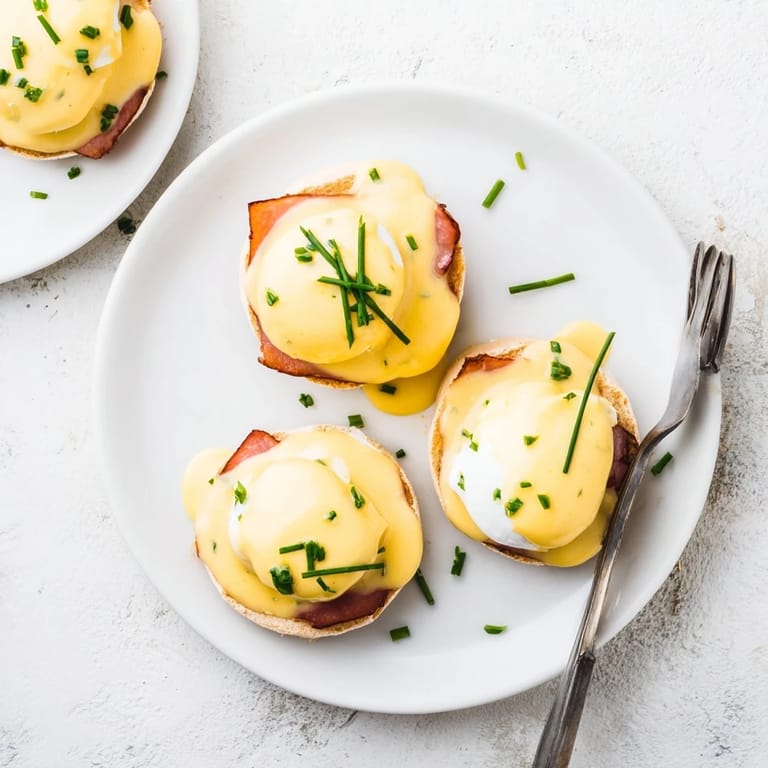
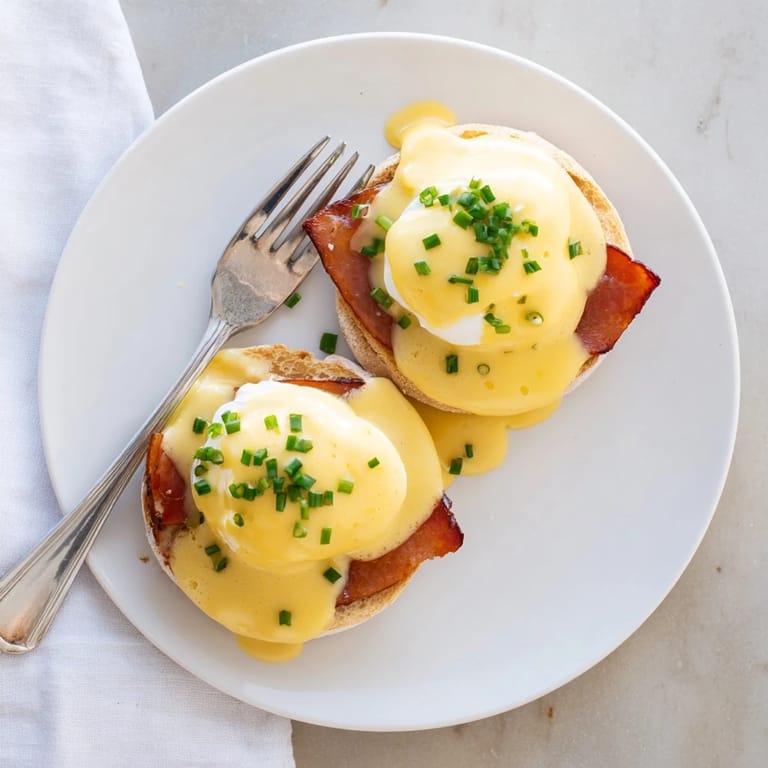
- Stack the toasted muffin, Canadian bacon, and poached egg, then drown the whole thing in warm hollandaise and scatter with chives. Serve immediately while everything is still hot.
 Pin it
 This became our anniversary tradition after I finally mastered the hollandaise. Something about standing at the stove, carefully whisking that sauce, feels like an act of love. We eat slowly, savoring every bite, and nobody rushes to clean up the dishes.
Making Hollandaise Like a Pro
The double boiler method might seem old school, but it gives you total control over the heat. You want the water barely simmering, not rolling violently. Patience during the butter incorporation phase is what separates restaurant quality sauce from the stuff that separates and turns into a greasy mess.
Perfect Poached Eggs Every Time
The vinegar trick is real, but so is the temperature of your water. Gentle bubbles are what you want, nothing aggressive. Crack each egg into a small bowl first, then gently slide it into the water, and resist the urge to poke at it while it cooks.
Assembly and Timing Secrets
Have everything ready before you start poaching the eggs because they wait for no one. Warm your plates, keep the hollandaise over that gentle heat, and toast the muffins last so they stay crisp. The difference between a good Eggs Benedict and a great one is serving it immediately while the yolks are still warm and runny.
- Work in batches if youre serving more than four people
- Keep the poaching water at the right level between batches
- Extra hollandaise stores in the fridge for up to two days
 Pin it
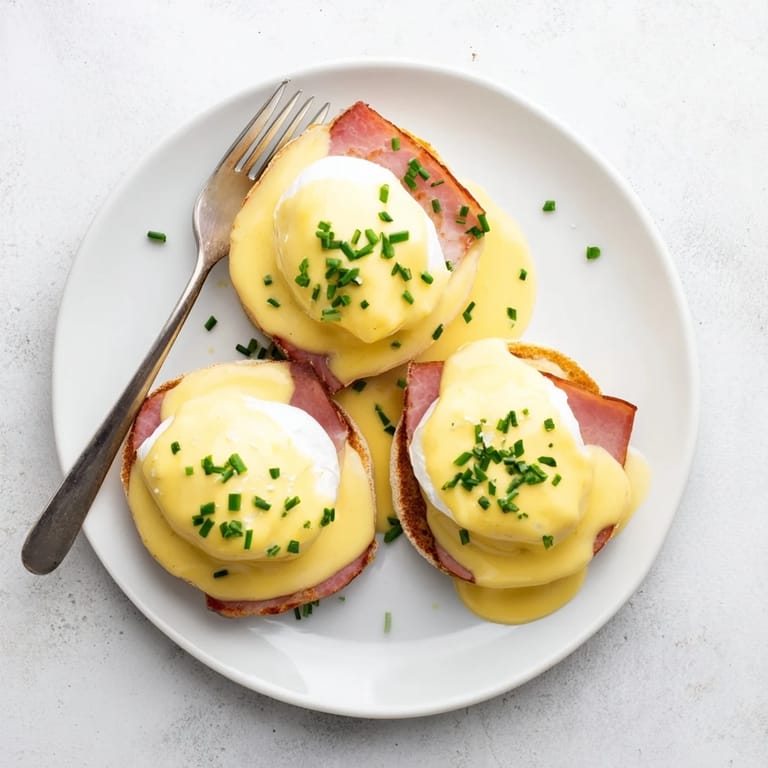
 There is nothing quite like cutting into that poached egg and watching the yolk mix with the hollandaise. Brunch at home just became the best part of your week.
Common Questions
- → What makes hollandaise sauce curdle?
Hollandaise curdles when the egg yolks overheat or the butter is added too quickly. Keep the water at a gentle simmer, not boiling. Drizzle the warm butter slowly while whisking constantly to create a stable emulsion.
- → How do I get perfectly poached eggs?
Use fresh eggs, add white vinegar to simmering water, and create a gentle vortex before sliding in each egg. Cook for 3-4 minutes for runny yolks. Crack eggs into small bowls first to prevent shells from entering the water.
- → Can I make hollandaise sauce ahead?
Hollandaise is best served immediately but can be kept warm for up to an hour. Place the bowl over lukewarm water, stirring occasionally. Do not refrigerate and reheat, as the sauce will separate.
- → What's the difference between Canadian bacon and regular bacon?
Canadian bacon comes from the pork loin and is lean, cured, and fully cooked. Regular bacon comes from pork belly, has more fat, and requires cooking. Canadian bacon provides the traditional salty, meaty element in Eggs Benedict.
- → How do I make this vegetarian?
Replace Canadian bacon with sautéed fresh spinach, steamed asparagus, or sliced tomatoes. You can also use portobello mushrooms or avocado. The hollandaise sauce remains the same, making this easy to adapt.
- → Why use a double boiler for hollandaise?
The double boiler provides gentle, indirect heat that prevents the egg yolks from scrambling. This controlled temperature allows you to cook the yolks enough for food safety while creating a smooth, creamy emulsion with the butter.