 Pin it
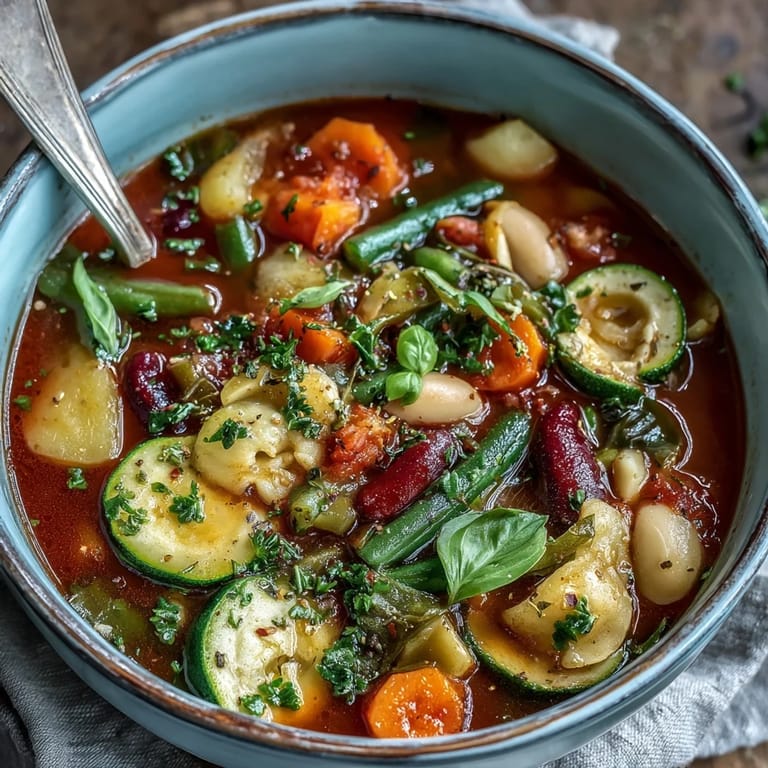
 There's something about October that makes me crave minestrone, that glorious Italian vegetable soup that tastes like someone gathered the entire farmer's market and turned it into liquid comfort. My grandmother used to make it on rainy afternoons, and the kitchen would fill with this warm, herbaceous steam that made everything feel right. Now I make it myself, and it's become my go-to when I want to feel grounded without spending hours in the kitchen. The beauty of minestrone is that it meets you where you are, welcoming whatever vegetables are lingering in your crisper drawer.
I made this for my roommate once when she came home exhausted from a terrible day, and watching her face soften after that first spoonful reminded me why cooking matters. She ate two bowls in silence, and I didn't need her words to know it helped.
Ingredients
- Olive oil: Use a good quality one you'd actually taste on bread, because it's not going to cook long enough to hide.
- Onion and garlic: These are your flavor foundation, so don't skip the aromatic step even though you're tempted.
- Carrots, celery, zucchini: The classic Italian soffritto vegetables, each bringing their own sweetness and body to the broth.
- Potato: It adds a gentle starch that makes the soup feel substantial without being heavy.
- Green beans: Cut them into bite-sized pieces so they cook evenly and don't stick in your teeth.
- Diced tomatoes with juices: The acidity is crucial, so get a good brand you trust and don't bother peeling fresh ones unless you're making this in summer when they're actually worth it.
- Vegetable broth and water: The ratio matters because too much broth makes it taste like you're trying too hard, and too much water makes it taste like you gave up.
- Cannellini beans: Rinse them well to remove the starchy liquid, unless you like your soup slightly gluey.
- Pasta: Tiny shapes like ditalini work best because they cook at the same pace as the vegetables and don't get lost.
- Dried oregano and basil: Add these early so they have time to wake up and bloom into the broth.
- Fresh parsley and basil: These go in at the very end, right before you eat, so they taste green and alive instead of cooked to death.
- Parmesan cheese: Optional but transforms an everyday bowl into something you'll remember.
Tired of Takeout? 🥡
Get 10 meals you can make faster than delivery arrives. Seriously.
One email. No spam. Unsubscribe anytime.
Instructions
- Build your flavor base:
- Heat olive oil in a large pot and let it shimmer before adding onion and garlic, watching them turn golden and fragrant after a few minutes. You'll know it's ready when your kitchen smells like an Italian grandmother is visiting.
- Layer in the vegetables:
- Add carrots, celery, zucchini, potato, and green beans, stirring occasionally as they soften and release their own flavors. This step takes patience, but it's worth it because you're building sweetness before anything hits the liquid.
- Bring it together:
- Pour in tomatoes with their juices, broth, and water, then scatter in your dried herbs and seasonings. Bring everything to a boil, watching the color deepen and the aromatics intensify.
- Let it simmer:
- Lower the heat, cover the pot, and let it bubble gently for 15 minutes while the vegetables become tender and the flavors marry. This is a good time to set the table or pour yourself a glass of wine.
- Add the beans and pasta:
- Uncover the pot and stir in cannellini beans and pasta, continuing to simmer uncovered for another 10 to 12 minutes until both are tender. Stir occasionally so the pasta doesn't stick to the bottom.
- Finish with fresh herbs:
- Fish out the bay leaf, then stir in fresh parsley and basil just before serving, tasting as you go to adjust salt and pepper. The soup should taste bright and balanced, not overseasoned.
 Pin it
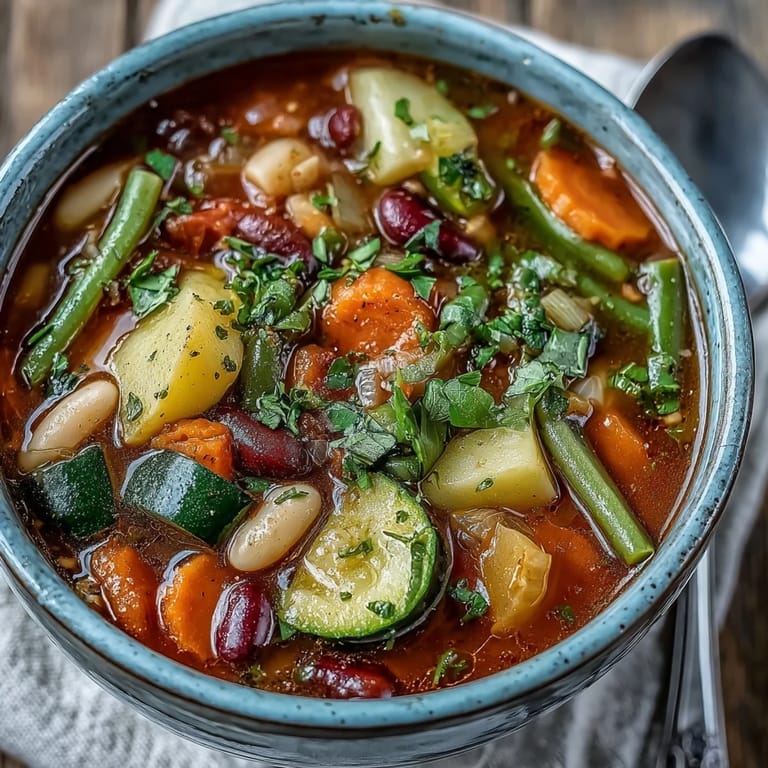
 There was a moment when my nephew asked for thirds and my sister raised her eyebrows because this kid usually pushed vegetables around his plate. That's when I understood minestrone isn't really a recipe, it's a way of showing up for people.
The Art of Substitution
The vegetables in minestrone are more of a suggestion than a rulebook, which is why this soup has survived Italian kitchens for generations. Winter calls for hearty cabbage and kale, spring welcomes fresh peas and asparagus, and summer demands soft spinach and tender zucchini. I once made it with what felt like random vegetables from my CSA box, and it was actually the best batch yet, so trust your instincts more than you trust my ingredient list.
Making It Your Own
Adding pancetta or diced sausage transforms this into something richer without changing the soul of the dish. For a vegan version, use olive oil generously and add extra beans or lentils for protein, which honestly works beautifully and no one feels shortchanged. I've also thrown in pasta water instead of regular water when I forgot to buy more broth, and it actually worked because pasta water has its own gentle starch that thickens things naturally.
Serving and Storing
Minestrone tastes better cold than hot, meaning it's even more incredible the next day when all the flavors have had time to get to know each other. Serve it in wide bowls with crusty bread for soaking and shaved Parmesan if you're being fancy, or just grate some cheese over it and call it done.
- Store it in the fridge for up to four days and in the freezer for up to three months, though the pasta will soften quite a bit.
- If you're freezing it, consider adding the pasta after you thaw it rather than before, which keeps everything from turning to mush.
- Reheat gently on the stovetop with a splash of water or broth, never in the microwave where it tends to heat unevenly.
 Pin it
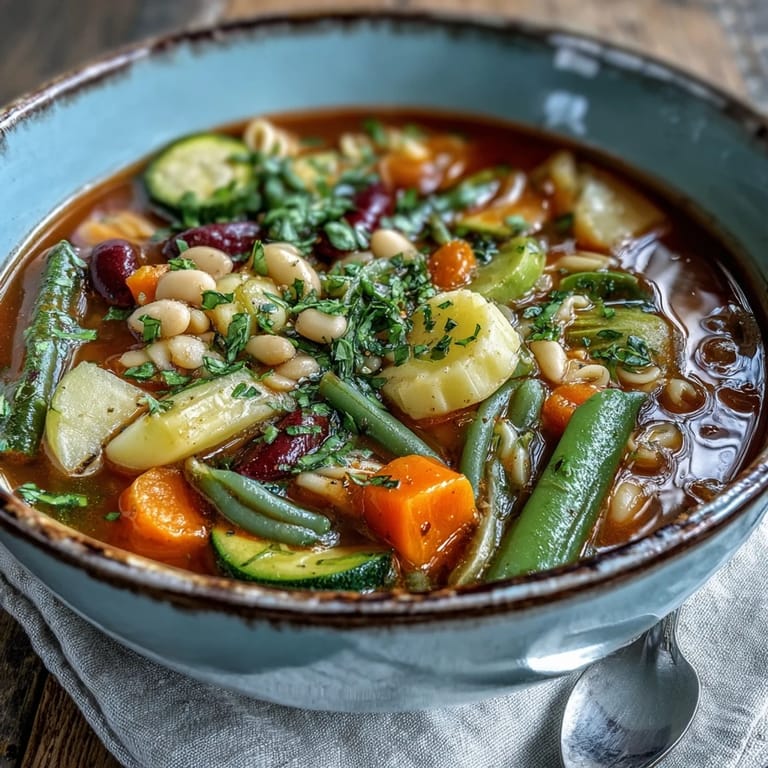
 This is the kind of soup that whispers comfort without shouting about it, the kind that fills you up but never weighs you down. Make it for someone you love, or make it for yourself on a day when you need reminding that simple food can be profound.
Common Questions
- → What vegetables work best in minestrone?
Traditional minestrone includes carrots, celery, onions, zucchini, potatoes, and green beans. However, you can easily substitute with seasonal options like spinach, kale, cabbage, or Swiss chard. The key is using a variety of textures and colors for a hearty, satisfying bowl.
- → Can I make minestrone soup ahead of time?
Absolutely—minestrone actually improves after sitting in the refrigerator for a day or two. The flavors have time to meld and develop deeper richness. Store in an airtight container for up to 5 days. Note that the pasta will continue absorbing liquid, so you may need to add more broth when reheating.
- → What type of pasta should I use?
Small pasta shapes work best—ditalini, elbow macaroni, small shells, or tubetti hold up well during simmering. Avoid larger shapes like spaghetti or fettuccine. For gluten-free versions, use rice-based small pasta or chickpea pasta, though cooking times may vary slightly.
- → How do I make minestrone vegan?
This soup is easily made vegan by simply omitting the Parmesan garnish or using a plant-based cheese alternative. The base itself is completely vegan, using olive oil instead of butter and vegetable broth. For extra protein, consider adding more beans or lentils to the mix.
- → Can I freeze minestrone soup?
Yes, minestrone freezes beautifully for up to 3 months. For best results, slightly undercook the pasta before freezing since it will continue softening during reheating. Cool completely before transferring to freezer-safe containers, leaving some space for expansion. Thaw overnight in the refrigerator before reheating gently on the stove.
- → What can I serve with minestrone?
Crusty Italian bread or garlic bread is the classic accompaniment, perfect for soaking up the flavorful broth. A simple green salad with vinaigrette balances the heartiness. For a complete Italian meal, pair with a glass of Chianti or your favorite red wine. Grilled cheese sandwiches also work wonderfully for a cozy lunch.