 Pin it
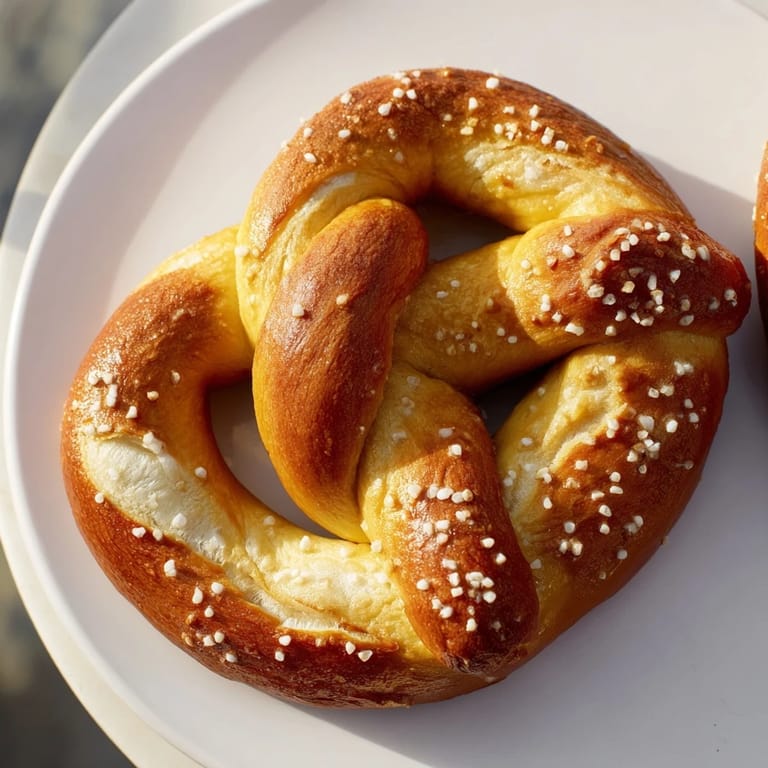
 The smell alone stopped me in my tracks at that street festival in Munich—yeasty, warm, impossibly inviting. I bought three pretzels that afternoon, eating while walking and pretending I knew exactly what I was doing with all that dough twisting. My first attempt back home produced something resembling knotted rope, but my roommate still ate every burned, misshapen piece with genuine enthusiasm. Weve come a long way from those kitchen failures, and now these golden beauties emerge from my oven looking like they came from a real bakery.
My sister visited last winter and we made an assembly line of pretzel twisting, flour dusting every surface and arguing about whose technique was superior. She still insists hers came out better, but I have photographic evidence suggesting otherwise. The house smelled like a German bakery for hours afterward, and neither of us complained about eating slightly malformed ones straight from the cooling rack.
Ingredients
- Bread flour: The higher protein content gives you that chewy, elastic texture that makes pretzels so satisfying to tear apart
- Active dry yeast: Make sure your water is warm but not hot—too hot and youll kill the yeast before it even gets started
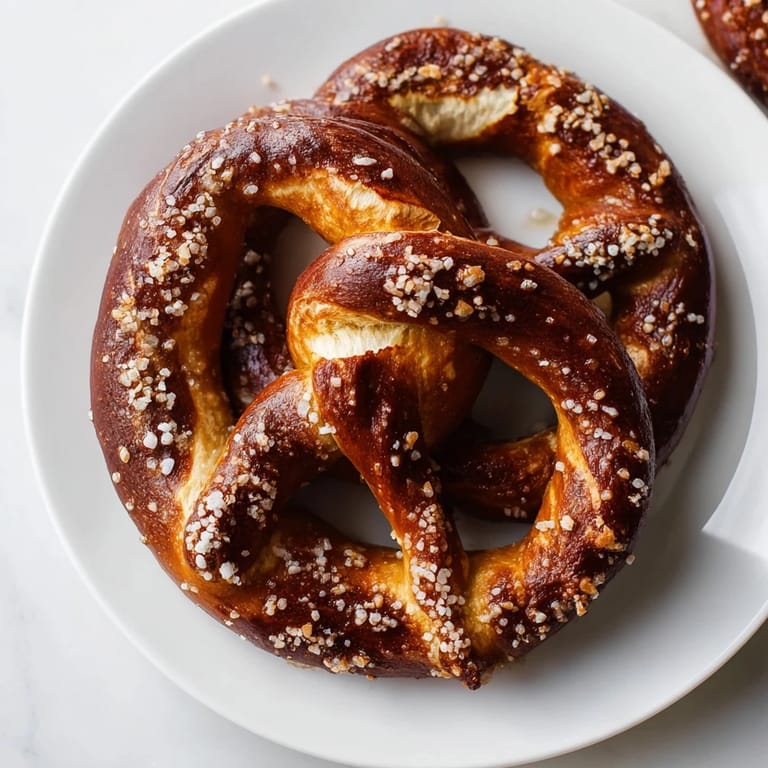
- Baking soda: This is the magic ingredient for the bath, creating that alkaline environment that gives pretzels their signature deep mahogany color
- Coarse pretzel salt: Regular table salt disappears into the dough, so invest in the big crystals that stay put on top
Tired of Takeout? 🥡
Get 10 meals you can make faster than delivery arrives. Seriously.
One email. No spam. Unsubscribe anytime.
Instructions
- Wake up the yeast:
- Stir your warm water, sugar, and yeast together and wait for that beautiful foam to form—it tells you the yeast is alive and ready to work its magic
- Build the dough:
- Add melted butter and salt to your yeast mixture, then gradually incorporate flour until you have a shaggy mass that holds together
- Knead it smooth:
- Turn onto a floured surface and knead for 5 to 7 minutes until the dough fights back slightly when you press it—that elastic bounce means gluten is developing
- Let it rise:
- Place in an oiled bowl, cover, and walk away for an hour until it looks impressively puffy and doubled in size
- Shape the pretzels:
- Divide dough into 8 pieces, roll each into a long rope, form a U shape, twist the ends twice, then fold them down to create that classic pretzel form
- The baking soda bath:
- Boil water with baking soda and carefully dip each pretzel for 30 seconds—this is what creates the authentic pretzel flavor and color
- Bake to perfection:
- Brush with egg wash, sprinkle generously with salt, and bake at 450°F for 12 to 15 minutes until deeply golden brown
 Pin it
 My dad still talks about the first time he tried these fresh from the oven, saying they tasted better than anything from the ballpark. Now he requests them every time he visits, and Ive learned to double the batch because the first round always disappears before they even cool completely.
The Art of Shaping
Dont stress if your first few pretzels look more like abstract art than textbook examples. The dough forgives many sins, and even irregular shapes bake up deliciously. I find it helps to watch a quick tutorial video first—seeing the twist in motion makes more sense than reading instructions.
Temperature Matters
Your yeast water should feel like a warm bath, not a hot tub. Test it on your wrist—it should be pleasant and warm, never uncomfortable. Too cold and the yeast stays sleepy, too hot and you end up with dead dough that never rises.
Serving Ideas
These pretzels are best eaten within an hour of baking while still slightly warm. The texture changes as they cool, becoming more breadlike and less chewy. If you need to store them, wrap individually and rewarm in a 350°F oven for 5 minutes before serving.
- Try cinnamon sugar instead of salt for a sweet breakfast version
- Mix shredded cheese into the dough for cheese stuffed pretzels
- Freeze shaped unboiled pretzels on a baking sheet, then transfer to bags for fresh pretzels anytime
 Pin it
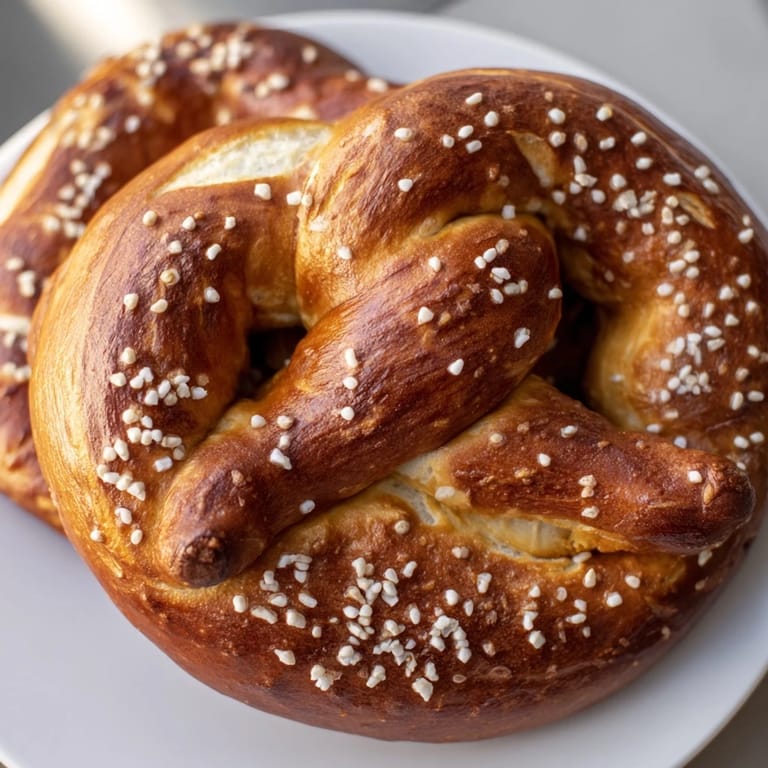
 There is something deeply satisfying about pulling a batch of these from the oven, golden and glistening, knowing you created something so comforting from simple ingredients. Grab a cold beer and share them with someone you love.
Common Questions
- → What makes pretzels get their distinctive brown color and chewy texture?
The baking soda bath is essential. Boiling the shaped dough in water mixed with baking soda creates an alkaline environment that promotes Maillard browning during baking. This chemical reaction gives pretzels their signature deep golden-brown color, glossy finish, and unique flavor profile that distinguishes them from regular bread.
- → Can I skip the baking soda bath?
While you technically can skip it, your results won't be authentic pretzels. Without the bath, you'll end up with simple bread sticks in pretzel shapes. They'll lack the characteristic chewy texture, glossy exterior, deep golden color, and distinctively tangy flavor that define true soft pretzels.
- → Why is my dough too sticky to work with?
Humidity and flour absorption can vary. If your dough feels excessively sticky, add additional flour one tablespoon at a time while kneading until it becomes smooth and elastic. Conversely, if it's dry and cracks, add water one teaspoon at a time. The goal is a dough that's tacky but doesn't stick heavily to your hands.
- → Can I make these pretzels ahead of time?
Yes. Shape the pretzels and place them on parchment-lined baking sheets, then refrigerate overnight. Let them come to room temperature for 30 minutes before proceeding with the baking soda bath. Alternatively, bake completely and freeze for up to 3 months. Reheat frozen pretzels in a 350°F oven for 10 minutes.
- → What's the purpose of the egg wash?
The egg wash creates a beautiful sheen and helps the coarse salt adhere to the surface. For a vegan alternative, brush with melted plant-based butter or olive oil instead. You can also skip the wash entirely, though the final appearance will be more matte than glossy.
- → Can I use active dry yeast instead of instant yeast?
Absolutely. The recipe calls for active dry yeast, which needs to be bloomed in warm water with sugar first. This step wakes up the yeast and proves it's active before incorporating it into your dough. If using instant yeast, you can mix it directly with the flour, but you'll still need the warm water for hydration.
- → How do I get the classic pretzel shape?
Roll each dough piece into a long rope, then make a U-shape. Cross the ends over each other twice, creating two twists. Fold the twisted ends down and press them firmly onto the bottom curve of the U at roughly the 4 and 8 o'clock positions. Practice makes perfect—don't worry if your first few aren't bakery-perfect.
- → What dipping sauces work well besides mustard?
Classic yellow mustard or spicy brown mustard are traditional choices, but warm cheese sauce is equally popular. Honey mustard provides sweet contrast, while ranch dressing offers creamy coolness. For something different, try garlic butter, hummus, or even marinara sauce for dipping.